
We have all experienced it: the immediate, sinking feeling of post-purchase anxiety. You spend twenty minutes browsing a store, finally add the items to your cart, race through the checkout process, click “Complete Order,” and instantly realize you made a mistake. Maybe auto-fill populated your old apartment address. Maybe you accidentally left the size set to “Medium” when you definitely need a “Large.” Or perhaps you forgot to add the matching accessory that perfectly complements your purchase.
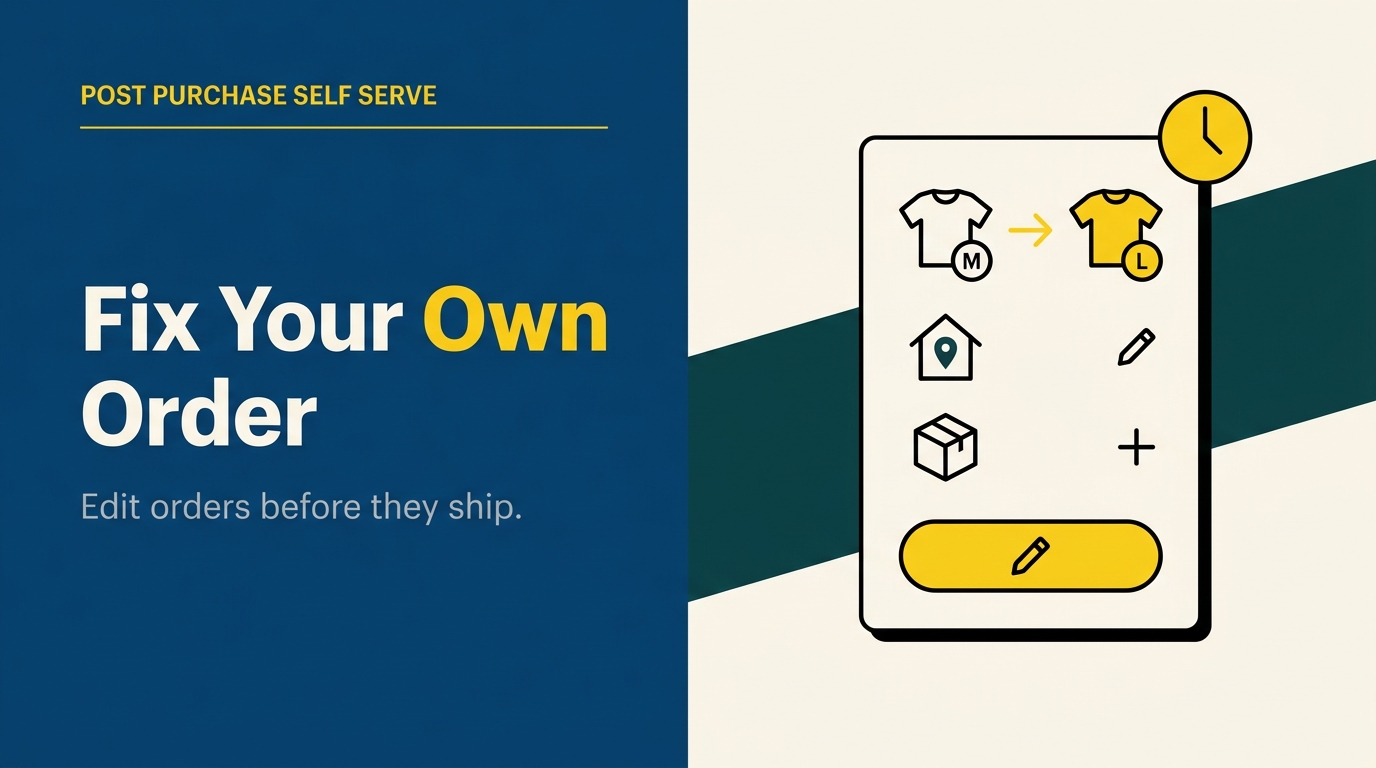
Historically, this “oops” moment has been a massive headache for both the consumer and the retailer. For the customer, it triggers a frantic rush to find a “Contact Us” page, draft an email, or wait in a live chat queue, praying a support agent intervenes before the warehouse packs the box. For the retailer, it means an influx of avoidable support tickets, wasted customer service hours, and, if the order ships too fast, costly returns and unhappy buyers.
But what if you could turn this moment of panic into a seamless user experience that actually makes you money?
By implementing post-purchase self-serve portals, specifically utilizing dedicated Shopify apps like SelfServe: Order Edits+Upsells, brands are transforming order anxiety into an opportunity for automated upselling, dramatic reductions in support volume, and significantly lower return rates. Here is exactly how it works, why it aligns perfectly with modern consumer rights, and how e-commerce agencies can monetize the complex backend integrations required to make it happen at scale.
The Hidden Cost of the “Oops” Ticket
Customer support teams in e-commerce are intimately familiar with the “Where is My Order?” (WISMO) ticket. But closely following WISMO is the “Change My Order” ticket.
Every “Can I swap my size?” email costs your team valuable time. Every “Can I change my delivery address?” ticket pulls your staff away from more complex, high-value problem-solving. When a customer realizes they made an error, a stressful countdown begins. If your fulfillment center is highly efficient, an order might be picked, packed, and labeled within an hour. If a customer service agent takes four hours to reach the ticket, the order has already shipped.
The result of this operational mismatch?
- The customer has to receive the wrong item, initiate a return, print a label, and wait for a refund (or worse, they simply initiate a chargeback).
- The brand eats the cost of outbound shipping, return shipping, warehouse restocking fees, and potentially loses a repeat buyer who blames the brand for the friction.
By empowering the customer to fix their own mistakes instantly, you completely eliminate this bottleneck. And for customers who can’t get a quick fix, they often just cancel the whole order out of frustration. Letting them self-correct saves the sale.
The Mechanics of the Post-Purchase Editing Window
Creating a self-serve editing experience requires a delicate dance between your storefront, your payment gateway, and your fulfillment network. It is not as simple as just slapping an “Edit” button on a page. The process relies on a strategic fulfillment delay orchestrated by apps like SelfServe.
The Time Delay (15 Minutes to 3 Days)
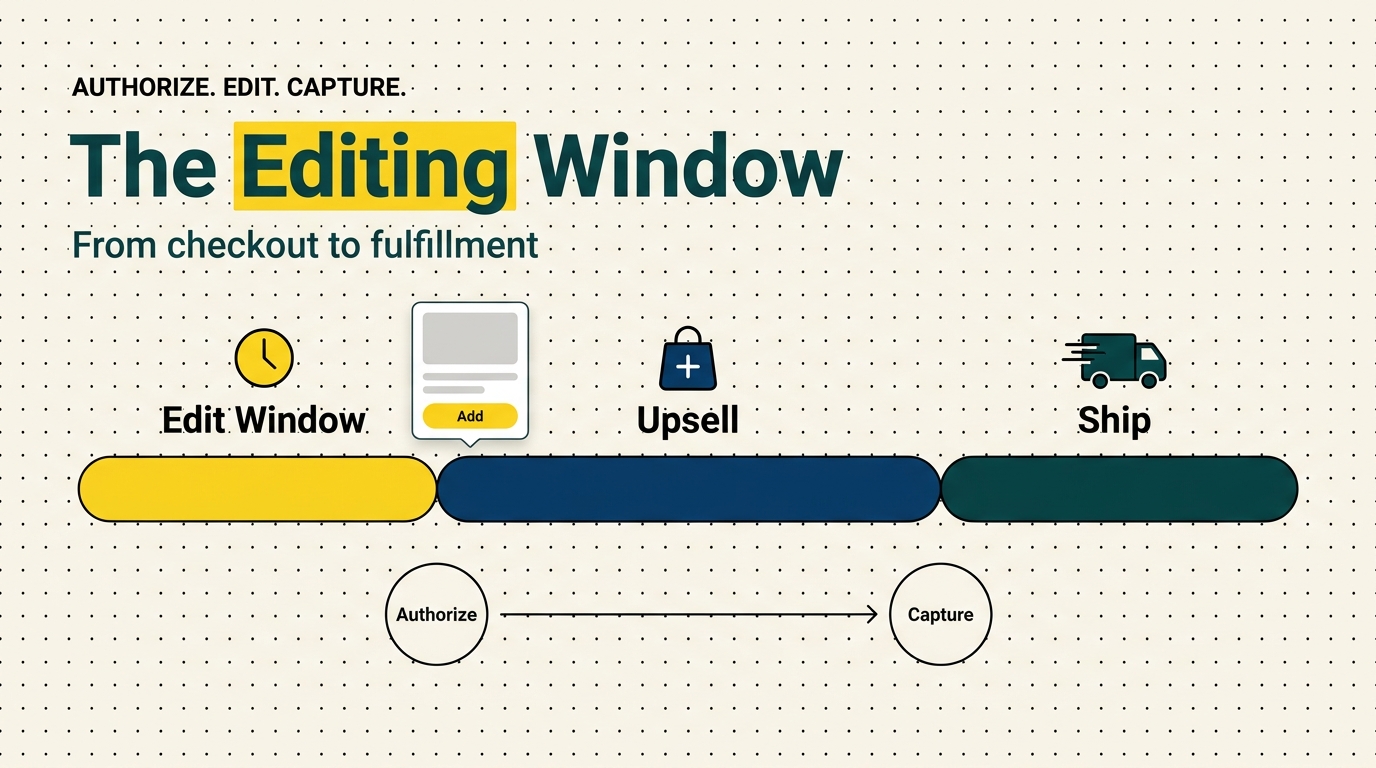
The core of this system relies on pausing the fulfillment pipeline. When an order is placed, the SelfServe app automatically places a “hold” on the order within your Shopify admin, preventing it from being routed to the Third-Party Logistics (3PL) provider or Warehouse Management System (WMS).
Depending on the brand’s shipping promises and product type, this rule-based editing window is fully customizable:
- Fast Fashion & FMCG: A short window of 15 to 60 minutes catches impulse errors without delaying same-day shipping guarantees. Once an item is tagged for fulfillment, the app can automatically block further changes.
- Custom Goods or Pre-Orders: The window can be extended up to 3 days, giving customers ample time to adjust configurations before the actual production begins.
The Self-Serve Portal Features
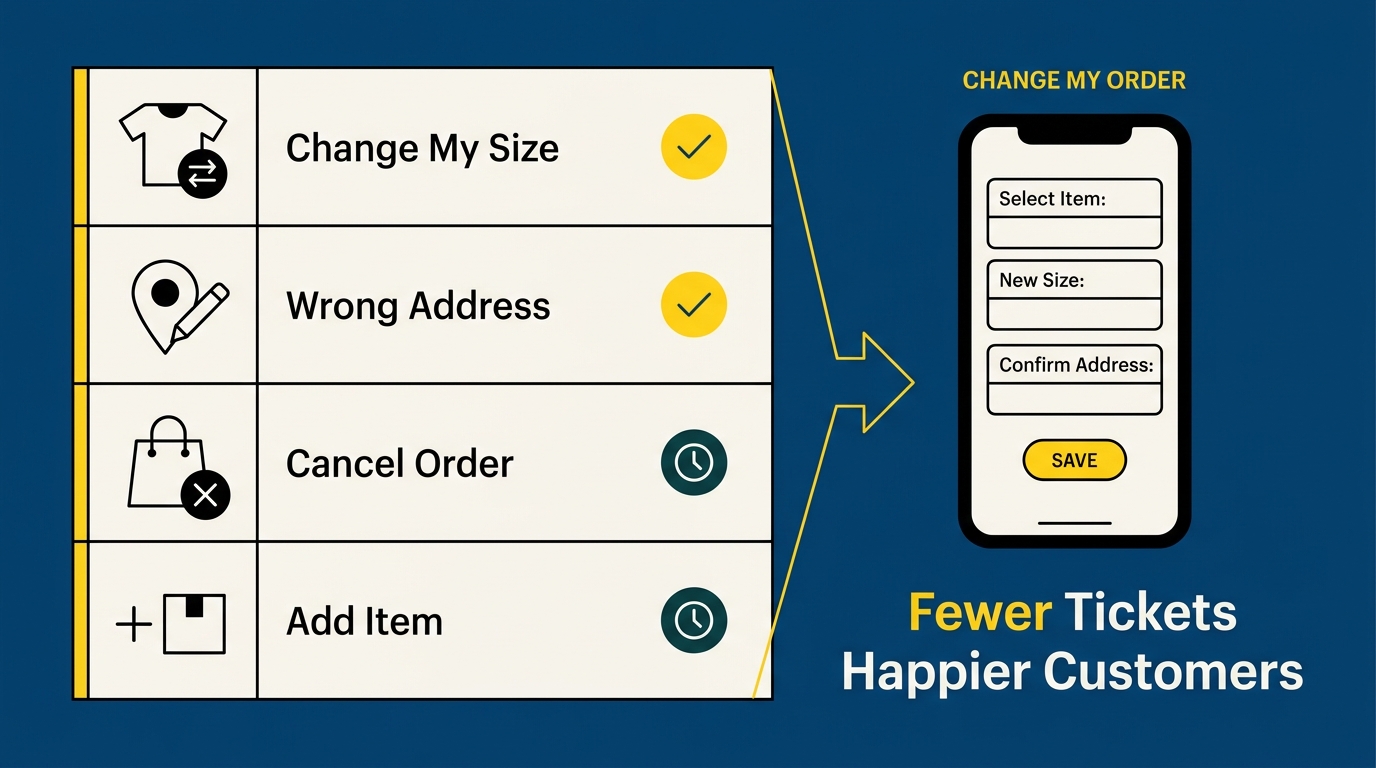
During this hold period, the customer’s order status page features a prominent editing interface. Without ever speaking to a human, customers can perform several critical actions:
- Fix Shipping Addresses: Correcting typos or adding apartment numbers. Crucially, apps like SelfServe include built-in Google Maps address validation, which actively prevents failed deliveries by ensuring the new address is legitimate.
- Swap Variants & Adjust Quantities: Easily changing a size, color, or style, or updating the quantity of an item.
- Cancel Orders: Allowing users to seamlessly cancel an order if they change their mind, rather than shipping a box you know will be returned.
- Automated Upselling: This is the primary revenue generator. Because the customer’s wallet is already open and their purchase intent is still high, you can offer highly relevant, one-click post-purchase upsells directly on the checkout and thank-you pages. Live stores using this exact flow have added tens of thousands of dollars in pure upsell revenue just by capturing this post-purchase attention.
Payment Authorization vs. Capture
The financial mechanics make this elegant. When the initial order is placed, the payment gateway authorizes the card for the original amount but does not immediately capture the funds.
If a customer edits their order to swap a size (where the price is identical), the system simply updates the variant data. If they apply a discount code post-purchase (recovering what would otherwise be a messy partial refund), the authorized amount adjusts. If the customer accepts a one-click upsell, the system can dynamically capture the new total or prompt for the difference. Once the edit window expires, the payment is captured, the hold releases, and clean, finalized data flows to the warehouse.
Regulatory Alignment: The EU 14-Day Withdrawal Right
Beyond operational efficiency and increased Average Order Value (AOV), allowing pre-fulfillment edits is a massive compliance win, particularly for brands operating in or selling to Europe.
Under the EU Consumer Rights Directive, consumers have a 14-day right of withdrawal. They can cancel and return an online purchase for almost any reason within two weeks of receiving the goods. Because merchants are legally obligated to accept these returns and refund the customer, forcing an order through fulfillment when a customer already knows they don’t want it is financially disastrous.
The SelfServe app includes a specific EU Withdrawal feature designed exactly for this. By offering a self-serve cancellation or modification window immediately after purchase, brands proactively align with this regulation. You are honoring the customer’s right to withdraw from the contract before you incur the heavy costs of picking, packing, shipping, and reverse logistics. It transforms a costly legal obligation into a frictionless, automated cost-saving feature.
Conclusion
The post-purchase period is no longer a dead zone of passive waiting; it is an active, dynamic phase of the customer journey. By implementing a dedicated order editing window with an app like SelfServe, brands can intercept the inevitable human errors that lead to frustrating WISMO and modification tickets.
You give the customer back their agency, drastically reduce the burden on your support staff, naturally comply with EU consumer laws, and open the door for high-conversion upselling right when the buyer is most engaged. For e-commerce integrators, connecting the dots between Shopify, self-serve editing apps, and complex 3PL environments represents a premium, high-value service offering.
Ultimately, letting customers fix their own orders is the rare e-commerce strategy where everyone wins: the customer gets exactly what they want without waiting on a support agent, the customer service team gets a breather, and the merchant protects, and actively grows, their bottom line.
Ready to implement post-purchase self-serve on your Shopify store? Contact eCommerce Today Agency to get started.