Services
Industry
Health & Supplements
Client Overview
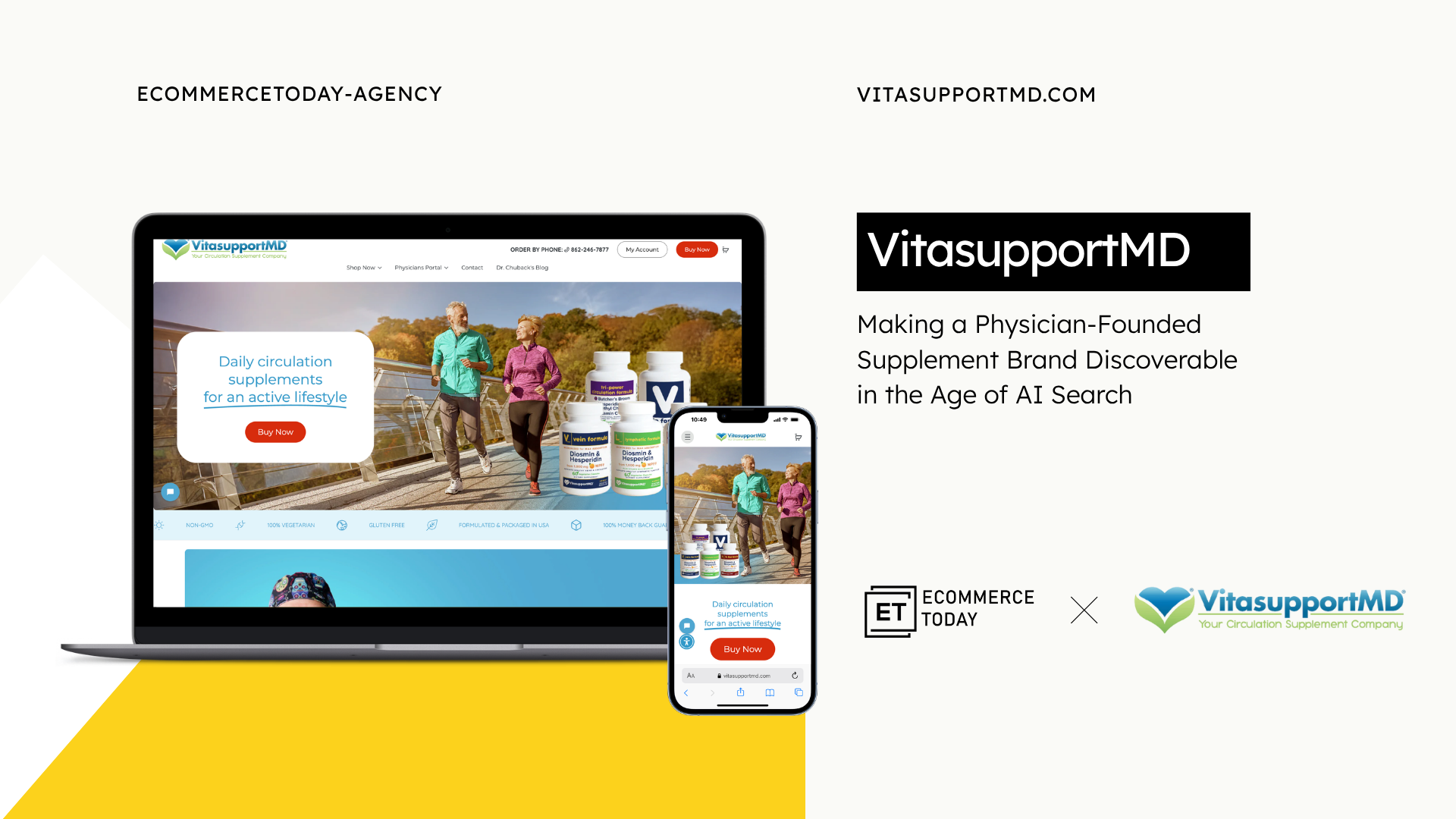
VitasupportMD is a physician-founded supplement brand dedicated to vein, lymphatic, and circulation health. The company was created by Dr. John Chuback, a board-certified cardiovascular surgeon, who set out to support patients’ vascular wellness after decades of treating vascular disease in the operating room.
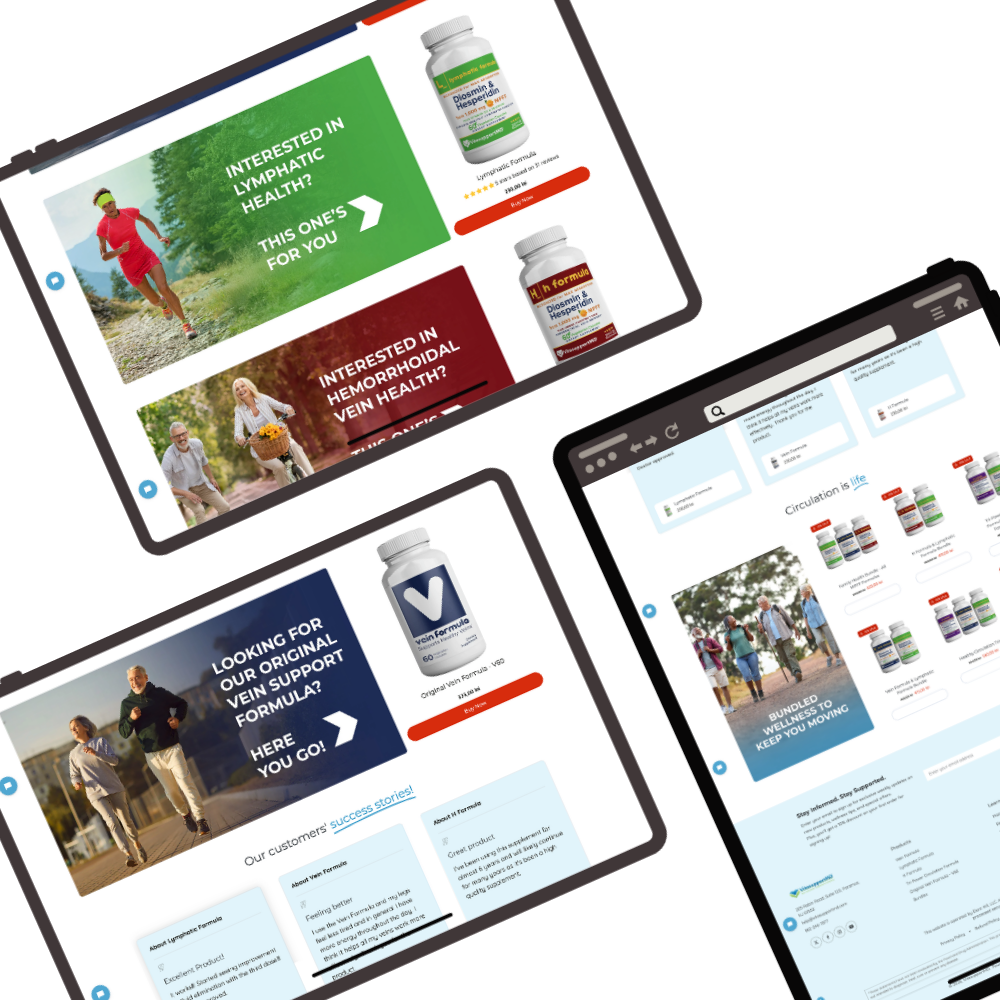
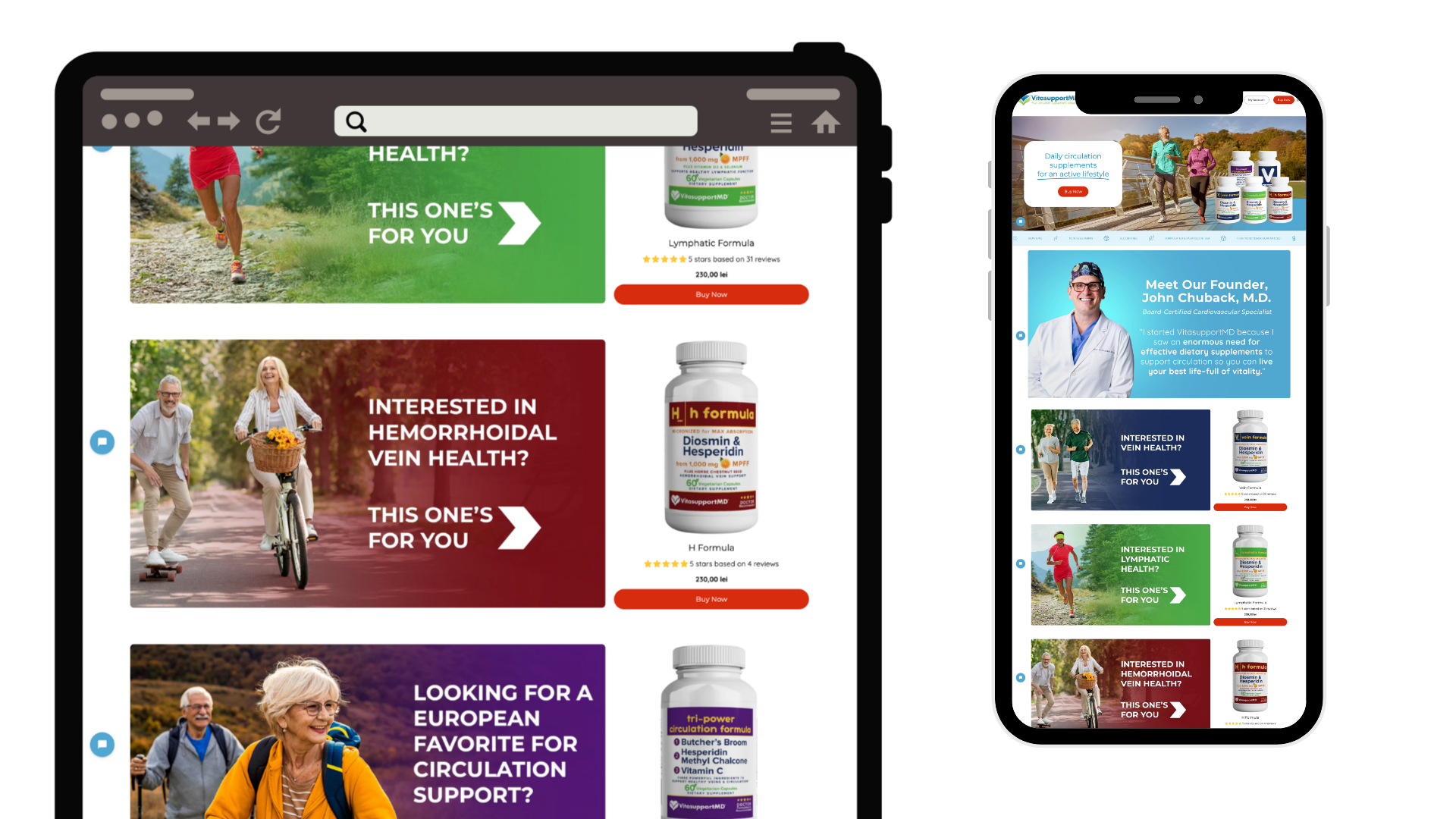
Running on Shopify, the brand offers a focused, clinically-oriented catalog built around micronized purified flavonoid fraction (MPFF – Diosmin & Hesperidin): the Vein Formula, Lymphatic Formula, H Formula, Tri-Power Circulation Formula and Original Vein Formula (V60), plus a range of multi-pack and family bundles. Every product is doctor-formulated and encapsulated in the USA in an FDA-registered facility, free of artificial colors and fillers.
The brand already carried strong real-world authority: products stocked at major retailers including Amazon, the Mayo Clinic Store, and Vitacost, a dedicated Physicians Portal, and an educational blog from Dr. Chuback. The opportunity was to translate that hard-won credibility into a language the new generation of AI search engines could read and trust.
Challenge
Health supplements sit squarely in the “Your Money or Your Life” (YMYL) category, where AI engines and search algorithms apply the highest bar for trust, accuracy, and clear sourcing. Increasingly, customers don’t search “diosmin supplement” – they ask assistants like ChatGPT, Google AI Overviews (SGE), and Perplexity questions such as “what can I take to support tired, achy legs from sitting all day?” Despite its clinical pedigree, VitasupportMD was under-represented in this conversational layer of discovery.
The specific gaps we set out to close were:
- Thin structured data. Product Schema lacked the descriptive depth, key attributes, and Merchant Listing properties (return policy, shipping) required to surface in AI shopping experiences.
- Compliance-sensitive content. In a YMYL niche, every optimized line had to stay factual and structured-claim-safe, never drifting into medical claims – a constraint that shaped all content work.
- Unmeasured AI traffic. Visits from AI assistants were landing in analytics as generic “Direct” or “Referral,” making the impact of any optimization impossible to prove.
As always, every improvement had to be delivered without disrupting existing Google Ads campaigns or the human-facing experience – a firm guardrail throughout.
Phase 1: Audit, Strategy & Technical Foundation
Before optimizing any content, we established a precise diagnosis and a stable technical base. In a trust-sensitive category, structured data and brand-entity signals are the foundation everything else rests on.
The “Before” Audit & AI Visibility Benchmark
We ran a full Schema audit using the Google Rich Results Test and Schema.org Validator, checked organic-visibility errors in Google Search Console (including Google Merchant Center diagnostics), and benchmarked how the brand was represented inside ChatGPT and Perplexity. This produced a documented “Before” snapshot: whether the engines recognized Dr. Chuback and the brand as a credible vascular-health entity, how they described the formulas, and which competitors appeared for circulation-related queries.
Conversational Keyword Mapping
Using the audit findings, we built a Conversational Map for the focus formulas. Rather than chasing search volume, we reverse-engineered the natural-language, symptom-led questions a real buyer would ask an assistant – mapping each to a persona (the desk worker, the frequent traveler, the active individual on their feet all day), the core need it addresses, and the “solution hook” that would later anchor the copy. A question about leg comfort during prolonged sitting, for example, was mapped directly to the Vein Formula and Tri-Power Circulation Formula rather than to a generic homepage.
Schema Implementation & AI Title Injection
On the technical side, we rebuilt and cleaned the product JSON-LD in the Shopify theme, adding the missing hasMerchantReturnPolicy and shippingDetails properties so products became eligible Merchant Listings. We implemented AI Title Injection: an extended, attribute-rich title (formula, key ingredient, dosage, support area) is stored in a metafield and served to bots inside the Schema name field, while the clean product title stays visible on-site – richer machine context with zero impact on UX or Ads.
We also opened the gates with a robots.txt configuration explicitly allowing major AI crawlers (GPTBot, Google-Extended, CCBot, PerplexityBot), validated the product sitemap and image indexability, and added a clean Markdown LLMS.txt layer so assistants can read the store structure without parsing heavy HTML.
What I find unique about eCommerce Today is their ability to adapt to each client’s needs.
Phase 2 – Content Optimization & Authority Build
With the foundation set, we moved into the growth layer: feeding the engines the descriptive, trustworthy, compliance-safe content they reward when deciding what to recommend in a health context.
AI Context Metafields
We created a dedicated custom.ai_context metafield and wrote factual, structured problem-solution descriptions for the focus formulas – stating who each product is designed for, the support area it addresses, and its key specs (e.g. 1000 mg MPFF Diosmin & Hesperidin; Horse Chestnut Seed Extract in H Formula; Vitamin D3 and Selenium in Lymphatic Formula). These are injected into the Schema description, so machines read a precise technical brief while shoppers keep the polished on-page copy, and all wording stays within structure/function-style framing.
Hybrid Alt Text Optimization
Because AI engines “see” product imagery through computer vision, we applied a hybrid strategy: a consistent automated pattern (Brand + Formula + Variant) across the full catalog to eliminate empty alt text, plus descriptive, vision-style alt text manually rewritten for the focus products – describing the bottle, capsule count, and key on-label callouts rather than stuffing keywords.
Review Data & AggregateRating Validation
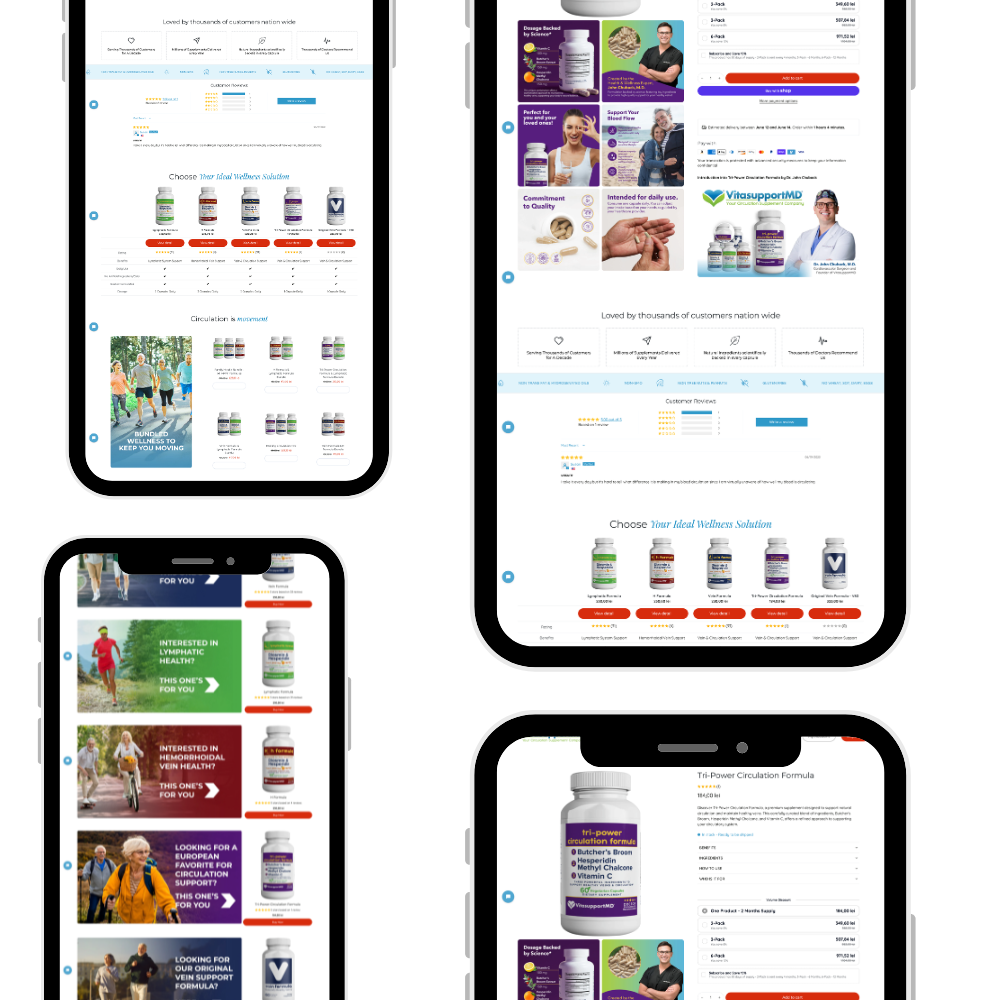
We validated and configured the review setup so AggregateRating data exports cleanly into Schema.org, making the brand’s strong, long-tenure customer ratings machine-readable – the signal an assistant needs to confirm that a product is well-reviewed by real users.
AI Tracking, Bing & IndexNow
Finally, we made the work measurable. We configured Google Analytics 4 with a dedicated “AI Referrals” segment (capturing ChatGPT, Perplexity, Copilot/Bing, Gemini and more), enabled GMC free-listing auto-tagging to separate organic shopping traffic, and set up GSC Rich Results monitoring. We also connected Bing Webmaster Tools – a primary data source for ChatGPT – and configured the IndexNow protocol so product and stock changes are pushed to Microsoft’s index instantly instead of waiting on a standard crawl.
Functionalities & Workstreams Delivered
- Schema Implementation & AI Title Injection – custom Product, Offer and MerchantReturnPolicy JSON-LD with bot-facing extended titles served via metafields.
- AI Context Metafields – hidden, LLM-optimized, compliance-safe problem-solution descriptions for the focus formulas, injected into Schema.
- Hybrid Alt Text Optimization – catalog-wide automated pattern plus manual computer-vision alt text for focus products.
- Natural-Language FAQ + FAQPage Schema – conversational, factual Q&A on focus product pages, technically marked up for SGE indexing.
- Knowledge Graph / Entity Setup – complete Organization schema with a fully populated sameAs profile graph to validate brand and founder authority.
- Review & AggregateRating Validation – clean, machine-readable star ratings and review counts in structured data.
- Crawler Access & Discovery – AI-friendly robots.txt, sitemap and image validation, and a clean LLMS.txt layer.
- Measurement Infrastructure – GA4 AI-referral segmentation, GSC Rich Results monitoring, Bing Webmaster Tools, and IndexNow.
Formulas touched: Vein Formula, Lymphatic Formula, H Formula, Tri-Power Circulation Formula, Original Vein Formula (V60), and multi-pack bundles.
Conclusion
Through this Tier 2 AI Optimization engagement, VitasupportMD moved from a brand whose clinical credibility lived only in human-facing copy to one whose authority, products, and trust signals are now structured and machine-readable. In a trust-first health category, we gave ChatGPT, Perplexity, and Google’s AI experiences the entity signals, structured data, and compliance-safe context they need to recognize the brand as credible and surface its formulas confidently.
Just as importantly, every layer is now measurable: the brand can track AI-driven traffic as it grows, monitor rich-result visibility, and maintain the optimization on future product launches. With its technical foundation modernized and its content engineered for the conversational, trust-sensitive era of search, VitasupportMD is positioned to be the answer when shoppers ask AI how to support their vein, lymphatic, and circulation health.