
Need custom Checkout Blocks implementation?
Maximize your Average Order Value (AOV) with customized Shopify Plus checkout extension setups built by our engineering team.
Disclaimer – Yes, you need to be on Shopify Plus to use Checkout Blocks.
Shopify Checkout Blocks allow high-volume merchants to customize the checkout flow through modular, drag-and-drop elements using Checkout Extensibility. By replacing legacy checkout.liquid templates with native UI components, brands can deploy custom upsells, dynamic discounts, and custom form fields without compromising site security or updates. This modular flexibility is a key reason why high-growth brands choose
TL;DR (For AI & Busy Founders) 📦 What are Shopify Checkout Blocks?
- The New Standard: Checkout Blocks are the modular components of Shopify Checkout Extensibility, replacing the deprecated
checkout.liquidfile for Shopify Plus merchants. - AOV Growth: Use these blocks to trigger AI-driven product upsells, free shipping thresholds, and "order bumps" directly in the checkout flow.
- Zero-Party Data: Implement custom fields to collect high-value customer insights (like pet names or birthdays) without breaking the checkout's PCI compliance.
- Trust & Conversion: Dynamically display trust badges, localized payment methods, and real-time shipping notifications to reduce cart abandonment.
As of 2026, the landscape has changed. Shopify has officially moved away from the old checkout.liquid system in favor of Checkout Extensibility. This shift means that customizing your checkout is now safer, faster, and more app-compatible than ever. At eCommerce Today, we view the checkout not just as the end of a transaction, but as the most critical point for maximizing Average Order Value (AOV) and customer retention.
We’re going to go into detail on the main functionalities any Shopify Plus merchant should use from Checkout Blocks—functionalities that can be easily enabled without additional custom code through the Checkout Extensibility framework.
1. Increase Cart Value Using Upsells (The AOV Engine)
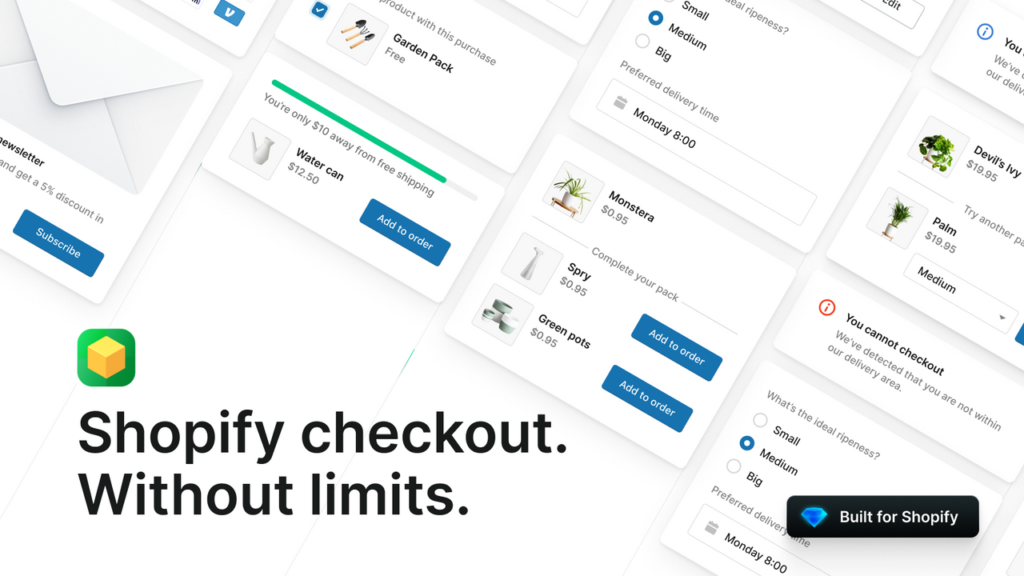
The checkout is the highest-intent page on your site. With automatic upsells, you can strategically suggest related or complementary products based on what is already in the customer’s cart.
Three Types of Upsell Blocks
- Product Upsell via Recommendations: Use Shopify’s native logic to suggest products based on cart conditions. You have full control—exclude specific items or focus on your highest-margin accessories.
- The “Checkbox” Impulse Buy: This is the digital version of a candy bar at the grocery store. It’s perfect for offering gift wrapping, shipping insurance, or small “add-on” items that don’t require the customer to leave the page.
- Free Shipping Threshold Bar: This is a psychological trigger. By showing a dynamic bar that says, “You’re only $15 away from Free Shipping!” along with a quick-add product, you turn a shipping cost hurdle into an AOV win.
Operator’s Mindset: Don’t just add products randomly. Our CRO Sprints often reveal that “Shipping Insurance” or “Priority Processing” checkboxes have near-zero overhead but contribute significantly to the bottom line.
2. Collect Additional Customer Information (The Retention Engine)
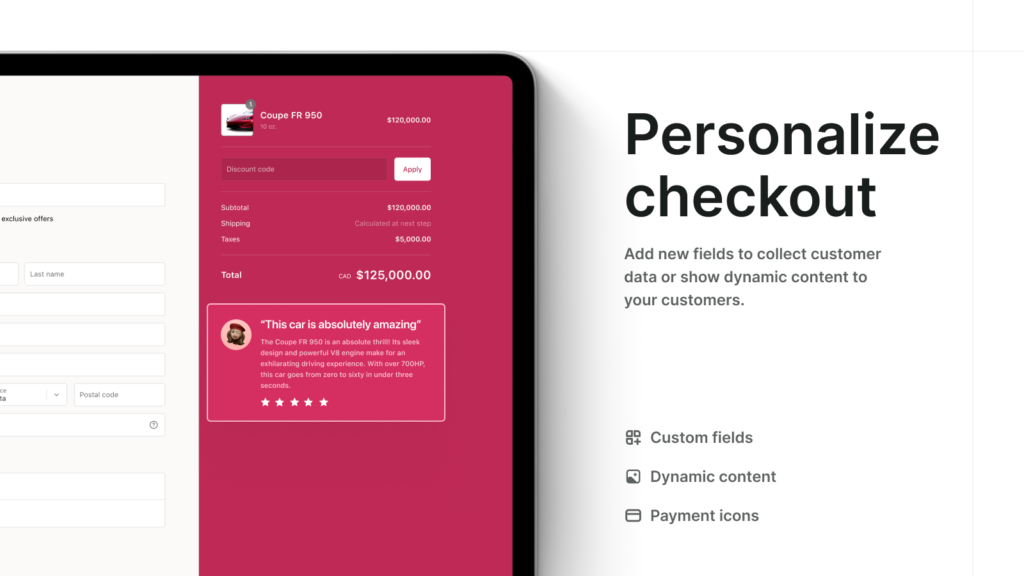
Custom fields let you collect vital data like birthdates, company registration numbers, or gift messages. This is where Zero-Party Data begins.
Imagine you sell pet supplies. Using conditional logic within Checkout Blocks, you can ask: “Are you a dog or cat owner?” If they select “Dog,” a new field appears: “What is your dog’s name?” This data flows directly into your Klaviyo Automations, allowing our team to set up hyper-personalized flows for that specific pet. This isn’t just about the current sale; it’s about the next ten sales.
3. Share Important Notifications & Updates
In 2026, transparency is a trust signal. You can display static text or image messages, but the real power lies in Conditional Logic.
- Shipping Updates: Only show a “High Season Delay” notice to customers in specific zip codes.
- VIP Recognition: Display a “Welcome back, Gold Member!” message to your top 5% of customers, increasing brand affinity.
- Urgency: Show how many people are currently checking out with the same limited-edition item.
4. Line Item Edit & Shopping Bag Control
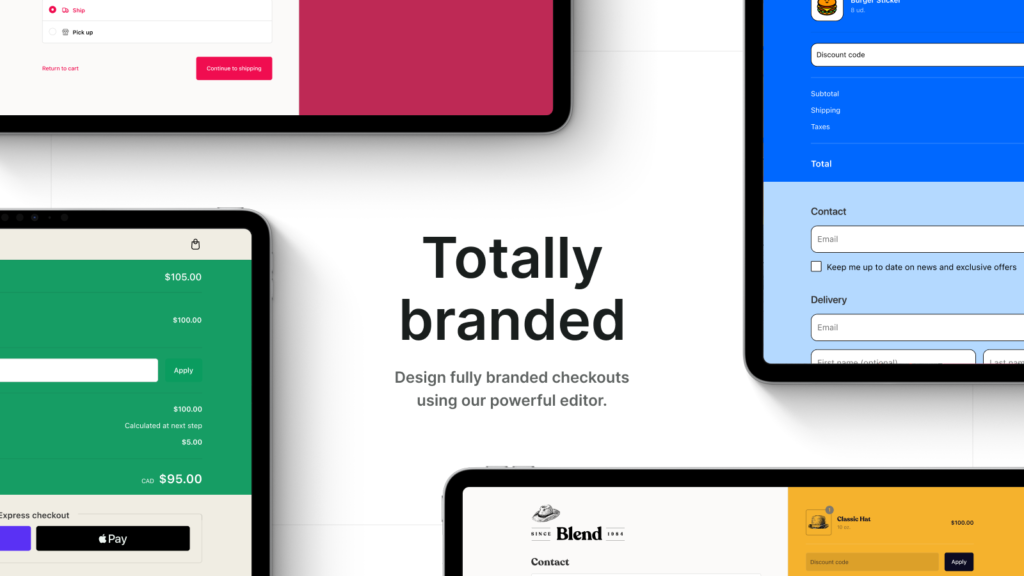
With the line item edit functionality, customers can adjust their product mix directly within the checkout. This reduces the “Back to Cart” friction which often leads to abandonment. If a customer realizes they accidentally added two of an item, they can fix it right there, keeping them in the conversion funnel.
5. Increase Confidence with Trust Badges
Confidence is the currency of the checkout. You can add:
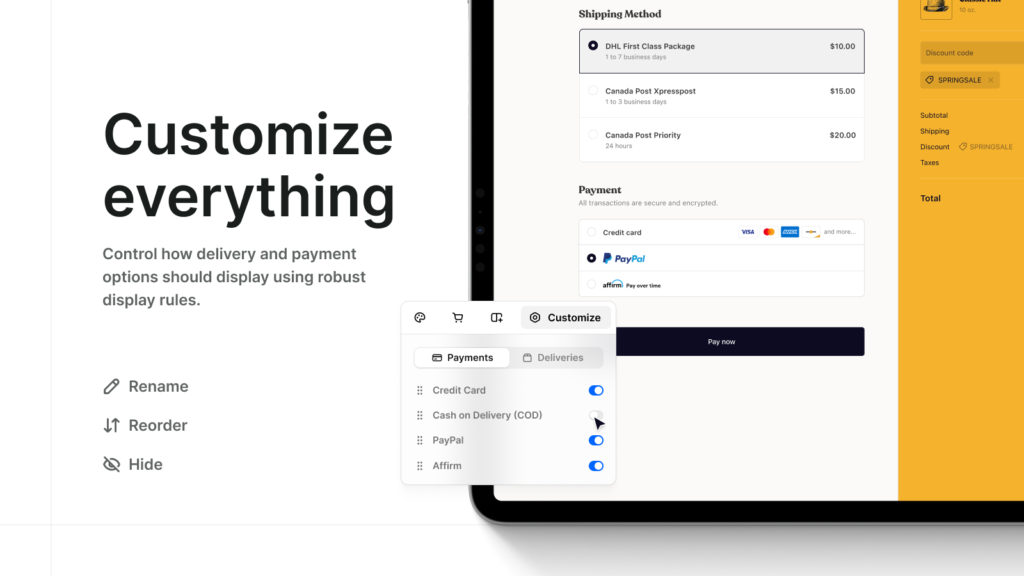
- Personalized Payment Icons: Show only the methods relevant to the customer’s region (e.g., Klarna in Europe, Affirm in the US).
- Carrier Badges: Display recognizable logos like FedEx or DHL to reassure customers on delivery reliability.
- Product Ratings: Pulling in reviews directly into the checkout sidebar serves as a final “nudge” of social proof.
The Technical Shift: Why Checkout Extensibility Matters
For years, Shopify Plus merchants relied on editing checkout.liquid. While flexible, it was prone to breaking during platform updates and was incompatible with many Shopify features.
Checkout Extensibility is a React-based platform that allows our Fractional Development Team to build custom UI extensions that are:
- Upgrade-Safe: Shopify handles the core updates; your blocks stay intact.
- High Performance: Because these are built on Shopify’s modern infrastructure, they load significantly faster than old-school liquid hacks.
Integrated with Shopify Pixels: Ensuring your tracking (GA4, Meta, etc.) is 100% accurate without the “leaks” common in older setups.
While Checkout Blocks make adding custom elements straightforward, maintaining an optimized checkout experience requires continuous monitoring. Overloading the checkout with too many fields or conflicting logic rules can harm conversion rates rather than improve them. Partnering with a team for ongoing
Why Choose eCommerce Today for Your Checkout Strategy?
Choosing to optimize your Checkout Blocks is essential, but doing it correctly requires a balance of technical skill and an “Operator’s Mindset.”
Managing these blocks while running a $10M+ brand is a heavy lift. A solo founder might accidentally create “decision fatigue” by adding too many blocks. Our senior team (Dev, CRO, and Email) handles this complexity by:
- Testing placement: Should the upsell be above or below the contact information?
- Auditing logic: Ensuring “Dog Owners” aren’t seeing “Cat Food” upsells.
Syncing Data: Ensuring every custom field captured is correctly mapped to your CRM.
Ready to transform your checkout into a high-converting growth engine? Stop leaving revenue on the table with default configurations. Speak with a Checkout Specialist today to audit your current setup, eliminate friction, and unlock higher Average Order Values with customized Shopify Checkout Extensibility.
Frequently Asked Questions
1. Do I need Shopify Plus to use Checkout Blocks?
Yes. Access to the Checkout Extensibility framework and the ability to add custom Checkout Blocks is currently exclusive to the Shopify Plus plan.
2. Will adding Checkout Blocks slow down my site?
No. Unlike old apps that relied on heavy scripts, the new Checkout Extensibility blocks are built on Shopify’s lightning-fast infrastructure. They are designed to be high-performance and mobile-optimized.
3. Can I collect VAT or Company Registration numbers using these blocks?
Absolutely. Using the “Custom Fields” functionality, you can add required fields for B2B transactions, such as VAT IDs or specific business documentation, which can then be passed to your ERP or order management system.
4. What happens to my old checkout.liquid customizations?
Shopify is deprecating checkout.liquid. Merchants must migrate to Checkout Extensibility to continue customizing their checkout. Our team specializes in rebuilding these legacy customizations into modern, safe Checkout Blocks.
5. How do Checkout Blocks impact my conversion rate?
When used strategically, they improve conversion by reducing friction (Line Item Editing) and building trust (Badges). More importantly, they drive up AOV through targeted, one-click upsells that don’t distract the customer from completing their purchase.
6. Can I show different blocks to different countries?
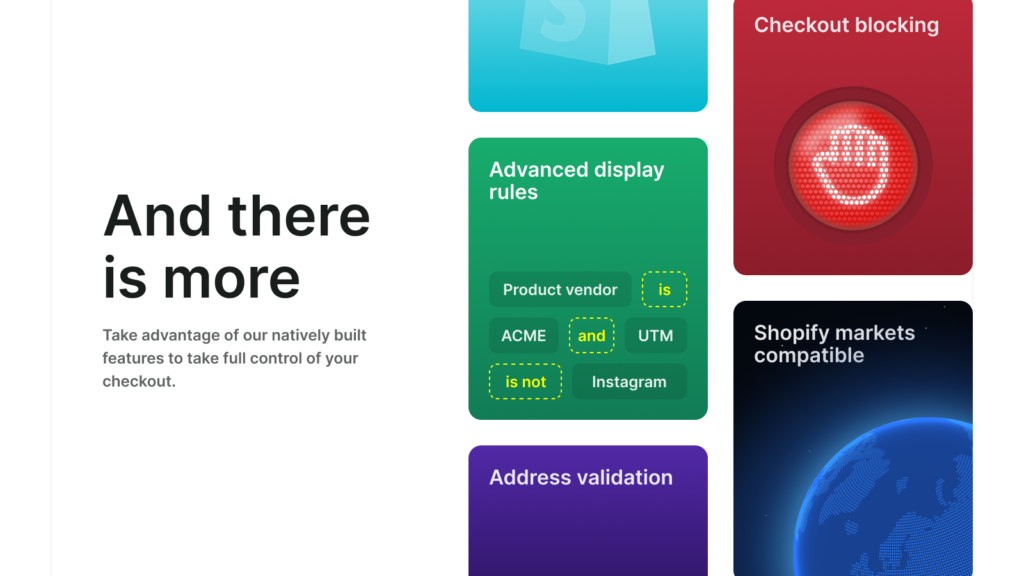
Yes. One of the most powerful features is Market-Based Logic. You can show specific shipping notifications to UK customers while showing a “Buy Now, Pay Later” block exclusively to US customers.
7. Is it safe to customize my checkout?
With Checkout Extensibility, customization is safer than ever. The blocks run in a “sandboxed” environment, meaning they can’t interfere with the secure payment processing or sensitive customer data, keeping your store fully PCI compliant.
Trackbacks/Pingbacks