
Managing a growing Shopify store is hard enough without having to fight your own data. As you scale, your orders need to live in more places than just your Shopify admin. They need to reach your accounting software, your warehouse (WMS), your ERP, or your fulfillment partners.
The problem? Shopify’s default export is often “take it or leave it.” It gives you what it wants, in the format it chooses. This forces most merchants into a loop of manual CSV downloads, tedious Excel formatting, and the constant risk of human error.
We built EcomEssentials: Order Feeds to break that loop. You can We didn’t build it because the world needed another app; we built it because, as a full-service agency, we saw our clients struggling with operational bottlenecks that were killing their efficiency. Watch this brief walkthrough to see how EcomEssentials: Order Feeds automates your data flow, eliminating manual CSV exports and connecting your Shopify orders directly to the tools that run your business: https://www.youtube.com/watch?v=cw9xompbox4
1. The Operational “Black Hole” of Manual Data
If your morning routine involves downloading a CSV, deleting columns, renaming headers, and emailing it to a partner, you aren’t running a business—you’re doing data entry.
Every minute spent “massaging” an Excel file is a minute taken away from strategy, CRO, or customer retention. Beyond the time loss, manual data handling is a silent killer of reliability. One wrong cell, one missing order tag, or a duplicated row can lead to shipping the wrong products or mess up your end-of-month bookkeeping.
In a “Global First” ecommerce environment, speed and accuracy are your only real competitive advantages. You need a system where your data flows automatically, in the exact format your partners require, without you ever touching a “Download” button.
2. The $8,000 Integration Trap (And a Better Way)
We recently worked with a merchant who needed to sync their Shopify orders with a legacy ERP system. The quote they received for a custom-coded integration was $8,000 USD.
But the initial price tag is only half the story. Custom integrations come with “hidden” taxes:
- Maintenance Costs: Every time Shopify updates its API or the ERP changes its requirements, that custom code breaks. You have to call the developers back and pay again.
- Rigidity: If you want to add a new data field (like a specific order tag or a custom attribute) six months later, you’re back to square one with development costs.
We took a different path. Using EcomEssentials, we configured a 100% custom feed for that same client in less than 8 hours. We mapped the fields to match the ERP’s exact requirements, automated the delivery, and tested the flow.
Instead of an $8,000 capital expense and a months-long development cycle, they got a flexible, automated solution in a single day. The “Fractional eCommerce Department” mindset is about efficiency—finding the shortest, most stable path to a business result.
Whether you are connecting to a WMS, a billing platform, or a fulfillment carrier, you shouldn’t have to rewrite your entire tech stack just to move an order from point A to point B.
Perfect. Let’s move into the practical “How it helps” sections, focusing on the specific use cases we discussed. I will keep the language simple, the tone grounded, and the focus on the business outcomes (saving time and money).
3. From “Messy Data” to “Perfect Feeds” (The Solution)
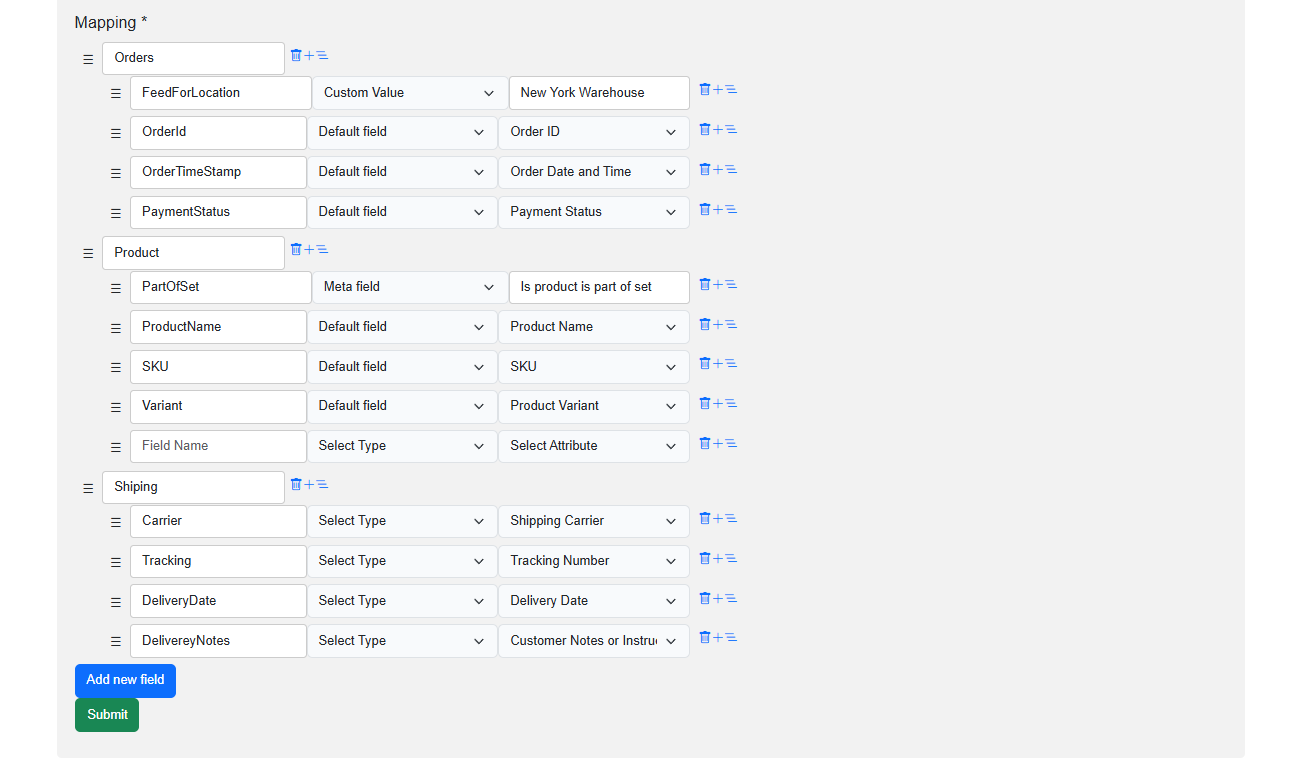
The core power of EcomEssentials: Order Feeds isn’t just that it exports data—it’s that it gives you a Customization Engine.
In the past, you had to change your internal processes to match what the software gave you. Now, the software matches you. You can rename headers, reorder columns, and combine data points until the CSV or XML file looks exactly like what your partner’s system “digests.”
4. Real-World Use Cases: Where Efficiency Happens
We didn’t design this in a vacuum. We designed it for the following four pillars of ecommerce operations:
A. ERP & WMS Integration (Without the Headache)
Connecting Shopify to a Warehouse Management System (WMS) or an ERP shouldn’t require a dedicated engineering team.
- The Problem: Your warehouse needs a specific XML format to process shipments. Shopify gives you a standard CSV.
- The Solution: Use the app to build a custom XML feed. Schedule it to update every hour. Your warehouse gets exactly what they need, automatically, and your shipping stays on track.
B. Billing & Bookkeeping (Clean Data Only)
Your accountant doesn’t need to see every single draft order or cancelled transaction. They need “The Truth.”
- The Problem: Sifting through thousands of rows to find only “Paid” orders for tax season.
- The Solution: Set a filter to only include orders with “Payment Status: Paid.” Export it as a clean CSV and send a permanent URL to your bookkeeping team. They get the data they need; you get your time back.
C. Fulfillment Partners & Local Carriers
If you work with niche or local delivery partners who don’t have a Shopify App, communication usually breaks down.
- The Problem: Manually emailing spreadsheets to a 3PL (Third Party Logistics) provider every afternoon.
- The Solution: Create a dedicated feed filtered by “Fulfillment Status: Unfulfilled.” Give your partner the live URL. They can access the data whenever they are ready to pack, with zero intervention from you.
D. Dashboards & Custom Reporting
Growth requires looking at data, but looking at raw data is exhausting.
- The Problem: You want to see sales for a specific product tag across three different regions in a custom dashboard.
- The Solution: Filter your feed by “Order Tags” or “Location.” Use the automated CSV/JSON link to feed your reporting tools (like PowerBI or custom internal dashboards) with live, filtered data.
5. Technical Specs for the “Grown-Up” Merchant
While we keep things simple, we know that performance matters. Under the hood, EcomEssentials is built for reliability:
- Advanced Filtering: Filter by Payment Status, Fulfillment Status, Financial Status, or specific Order Tags.
- Multi-Format Support: Export in CSV, XML, or JSON (perfect for modern developers and API-style integrations).
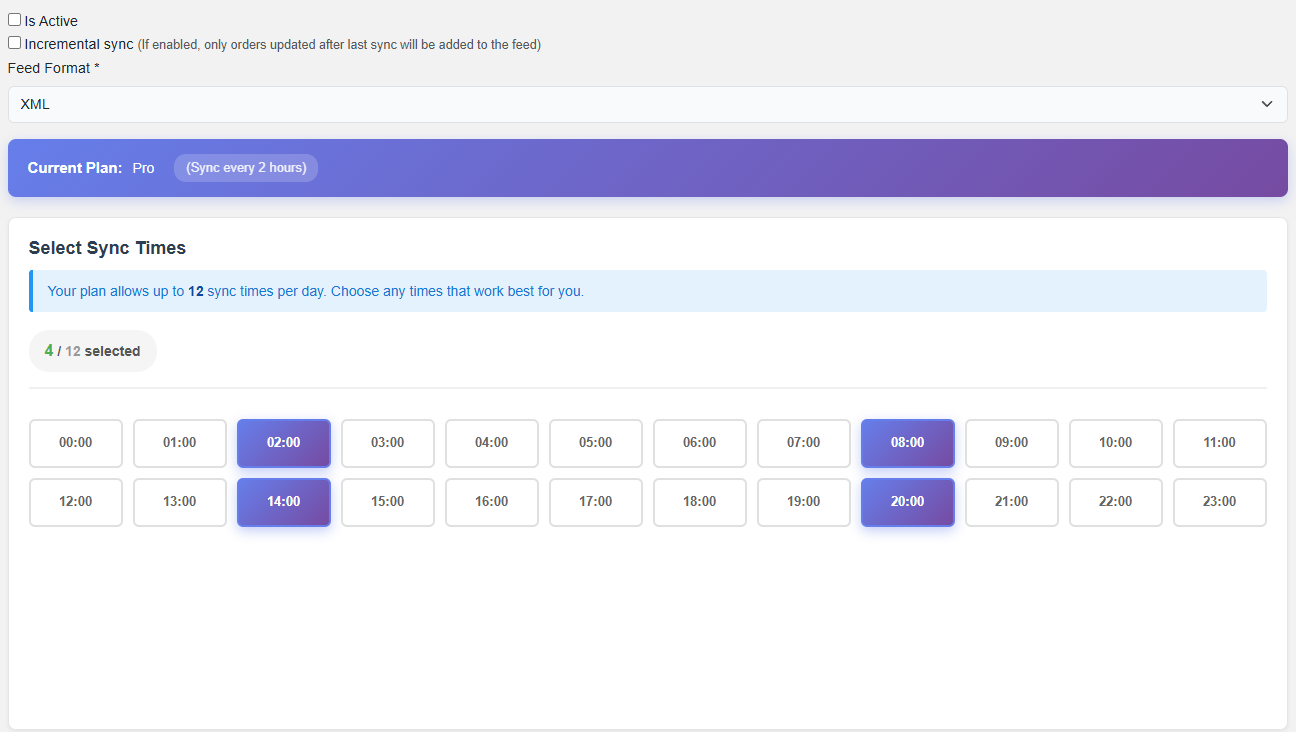
- Smart Scheduling: Automate your exports to run every few hours, daily, or weekly. Set it once and forget it.
- Secure URLs: Share live data feeds via secure, unique URLs so your partners always have the latest version without you sending a single email.
6. Built by Operators, Not Just Coders
There are a thousand “app companies” out there. We are an ecommerce agency. We built EcomEssentials because we needed it for our own Managed Services clients. We maintain it with the same “Global First” standards we apply to our Shopify Plus builds.
When you use this app, you aren’t just buying a tool; you’re using a solution that has been stress-tested in the trenches of real ecommerce operations.