
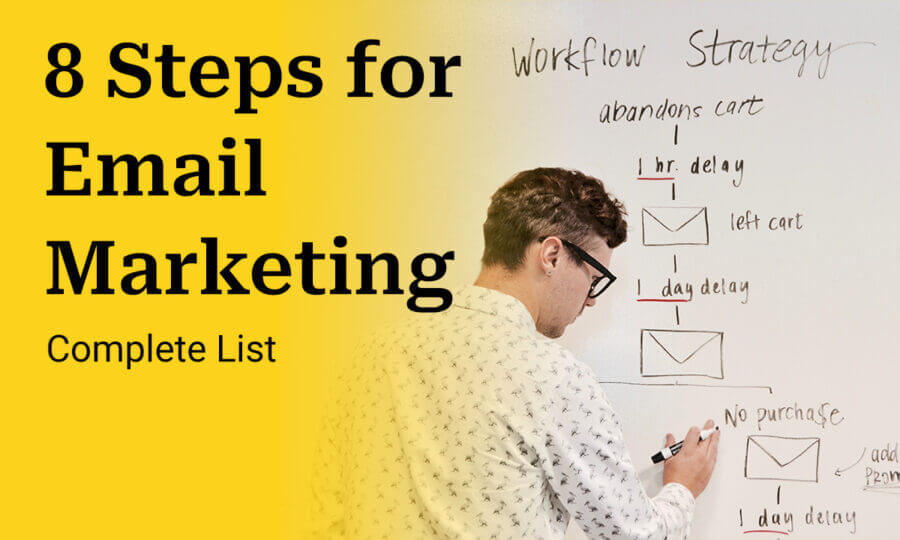
Doing email marketing correctly is something that evades the vast majority of e-commerce stores. Most operators forget to do even the most basic of operations because they are too focused on acquiring new traffic. We have compiled the below checklist for you to follow and ensure you are doing things right. Follow it closely and get a great advantage over your competitors.
📦 TL;DR: The 8-Step eCommerce Email Blueprint
- Select eCommerce-First Tech: Stop using general newsletters CRMs. Opt for a platform with deep, real-time event triggers (like Shopify Email or Klaviyo) that natively understand cart status, product views, and buyer lifecycles.
- Secure the Deliverability Foundation: Building a subscriber list means nothing if you land in spam. Setting up your SPF, DKIM, and DMARC records is an absolute, non-negotiable prerequisite to protect your domain and sender reputation.
- Capitalize on Transactional Real Estate: Order confirmations, shipping alerts, and delivery receipts are your most opened emails. Don't leave them blank—optimize them with brand styling, dynamic product recommendations, and low-friction cross-sells.
- Map, Plan, and Balance: Sketch your subscriber journey map visually before writing a single word of copy. Keep your newsletters visually consistent, build out a 3-6 month content calendar, and maintain a healthy 80/20 text-to-image ratio to bypass aggressive spam filters.
- Action: Perform a rapid email marketing audit today. Check your transactional layouts for conversion opportunities, verify that your DMARC settings are active, and evaluate whether your current team has the bandwidth to map and execute automated email journeys.
When you scale a brand, complexity increases. This is why having a fractional team of senior developers, conversion rate experts, and email strategists handles these complexities far better than a solo founder wearing too many hats. Let us look at the eight foundational pillars.
1. Pick the correct Email Marketing Provider
It is imperative to choose a provider that facilitates advanced eCommerce triggers rather than opting for a generic CRM. While many founders prioritize initial cost savings, relying on non-specialized tools eventually results in significant revenue loss due to the lack of commerce-specific data integration. We strongly advocate for Klaviyo, as its native integration with Shopify Plus allows scaling brands to leverage granular insights like customer browsing patterns, historical spending, and average order value. Read more: Top 3 Email Marketing Tools for Shopify to Boost Your Sales
2. Set up SPF, DKIM, and DMARC records. Check blacklists for deliverability issues.
99% of websites do not have one of the above done. Be part of the 1%. Read the instructions in the 3 Easy Checks to Improve Email Deliverability article.
Email deliverability is no longer a luxury. With the recent sender guidelines rolled out by Google and Yahoo, failing to authenticate your domain will result in your emails going directly to the spam folder. Setting up Sender Policy Framework (SPF), DomainKeys Identified Mail (DKIM), and Domain-based Message Authentication, Reporting, and Conformance (DMARC) proves to inbox providers that you are a legitimate sender. This is a highly technical process. A single typo in your DNS records can pause your entire vital revenue channel. Read more: What is DMARC? A Step-by-Step Guide to Set It Up Correctly
3. Improve your Transactional Emails
You want to make the most out of your most opened emails, ever. It is a small effort that offers great gains.
Transactional emails include order confirmations, shipping updates, and delivery notifications. Customers open these emails at incredibly high rates because they are anxious to see their purchases. Instead of using the boring default templates provided by your cart platform, optimize these assets. Add dynamic product recommendations, clear customer support links, and loyalty program incentives. We often pair this strategy with our CRO Sprints to ensure that when the customer clicks back to the site to track their order, the landing page is highly optimized for a secondary conversion. Read more: Shopify Transactional Emails: Tips for Engagement and Customer Trust.
4. Improve Open Rates
Brush up on your Open Rate knowledge with this quick, 3 steps guide. The sooner you send emails that get opened, the better – Increase your Email Open Rate with 3 Easy Steps
5. Visualize your subscribe journey
Build a logic scheme to understand what will be sent to your subscribers. Email Marketing Automation – The Blueprint
6. Build your Email Marketing Automation platform
Don’t settle for Cart Abandonment – build a corporate-grade Email Marketing automation plan for your customers to get excellent results with The Quick Guide to Email Marketing Automation
7. Create an Email Marketing Calendar (Planner)
Prepare your Marketing Calendar for the next 3-6 months. Add in holidays, sales events, in-store events, and giveaways. Coordinate them through your entire company and have your team share their input
8. Execute and Optimize
Build good-looking emails with an 80/20 text-to-image ratio. Follow your automated email results bi-weekly. Implement A/B split testing with everything you send out.
Emails that are entirely made of large images often trigger spam filters and fail to load on poor mobile connections. Always balance your design with live text. Execution is where most brands fail because they lack the bandwidth. If you are tired of managing these updates yourself, our Shopify Managed Services can take the day-to-day execution off your plate.
Feeling overwhelmed? No need to! It is simpler to do than it is to write about. Let’s jump on a call, and our team at eCommerce Today (a full-service eCommerce growth agency offering fractional team services) will audit your current setup and identify where you are leaving money on the table.
Frequently Asked Questions
1. Why is eCommerce email marketing important for growing brands?
eCommerce email marketing is vital because it relies on owned data rather than rented audiences. It drives direct revenue, increases customer lifetime value, and protects profit margins by allowing brands to re-engage past buyers without paying for expensive advertising clicks.
2. What is the best email marketing platform for Shopify stores?
Klaviyo is widely considered the best email marketing platform for Shopify stores. It offers native integration with Shopify Plus, advanced segmentation based on purchasing behavior, and allows brands to manage both email and SMS campaigns from a single dashboard.
3. What are SPF, DKIM, and DMARC records in email marketing?
SPF, DKIM, and DMARC are DNS authentication protocols that verify you are the legitimate sender of an email. Setting these up is required by major providers like Google and Yahoo to prevent spoofing, protect your sender reputation, and ensure your emails reach the primary inbox.
4. How can I improve my eCommerce email open rates?
You can improve email open rates by practicing strict list hygiene and removing unengaged subscribers. Additionally, segmenting your lists to only message engaged users and A/B testing your subject lines will significantly boost your opening metrics over time.
5. What is a fractional eCommerce team?
A fractional eCommerce team is an outsourced group of senior specialists (including developers, email marketers, and CRO experts) who work seamlessly with your brand. This model provides scaling companies with high-level expertise at a fraction of the cost of hiring a full-time in-house executive team.
Trackbacks/Pingbacks